
Sapne vs Everyone motivation is compelling because it does not exist in a comfortable vacuum. Dreams meet money, family expectations, fear, privilege, work and the possibility of failure. Treating the series as a collection of uplifting lines would flatten the tension that makes its themes relatable.
This article offers original analysis around concepts represented by existing Yaadscape products. It does not reproduce substantial dialogue, promise that a framed idea changes circumstances, or present fan-oriented artwork as officially licensed or affiliated with TVF.
The aim is to understand why themes such as capability, social pressure and unrealised ambition resonate, then show how product discovery can remain contextual rather than becoming a transcript.
Dreams are placed against resistance
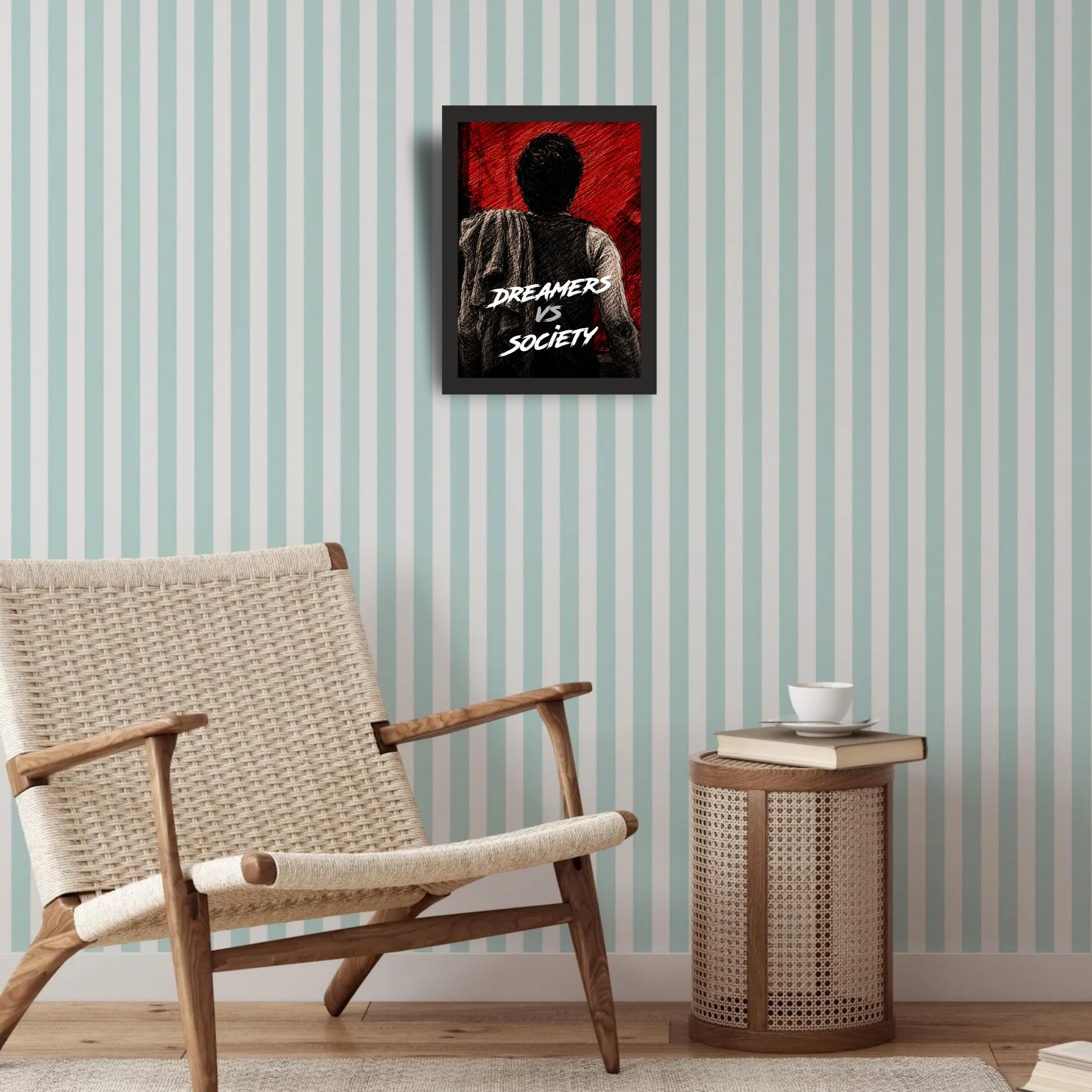
Dreamers vs Society expresses a conflict between an individual's imagined future and the expectations surrounding them. Resistance may come from family caution, financial reality, class, institutional limits or internal doubt. None of these can be dismissed by simply wanting something more strongly.
Dream-focused art can therefore function as a reminder to take an aspiration seriously, but it should not imply that effort guarantees a particular result. Useful motivation acknowledges planning, support, timing and unequal opportunity alongside personal agency.
The Movies, TV & Music collection contains these products as series-related art rather than relocating them into a generic self-help category.
Fear and failure are not identical
Fear may prevent action, but it can also signal uncertainty that deserves preparation. Failure is an outcome, not a permanent identity. Darr Ghaav Lagaav and Nakaami Se Darun designs represent different ways of engaging with risk and pain.
A responsible reading avoids shaming people for hesitation. Someone can act courageously while still feeling afraid, change direction after learning, or decide that a cost is too high. A wall frame can prompt reflection; it cannot evaluate the complexity of a real decision.
This distinction makes fear-related art better suited to a private study or creative space than to an employer's generic demand for performance.
Talent, capability and work
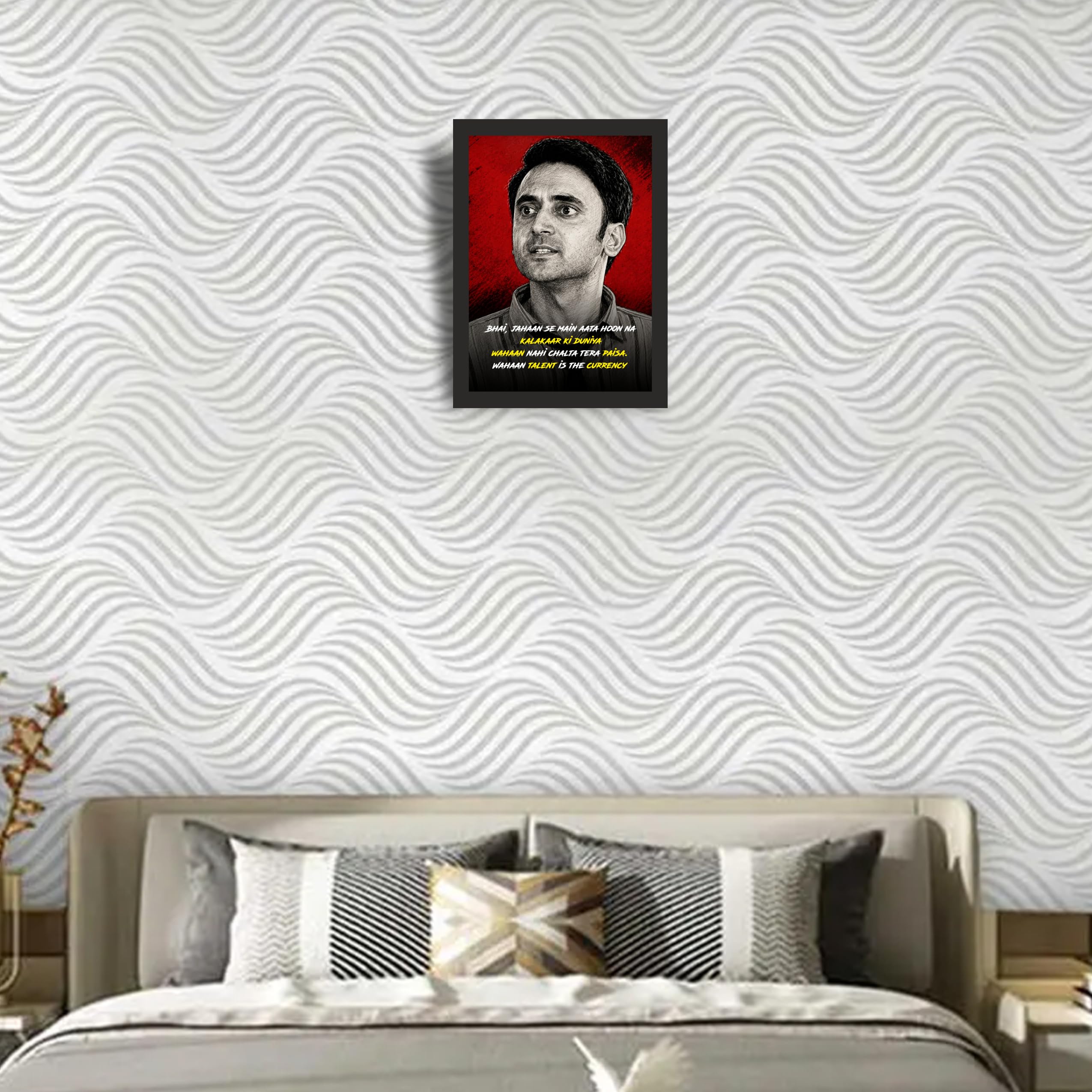
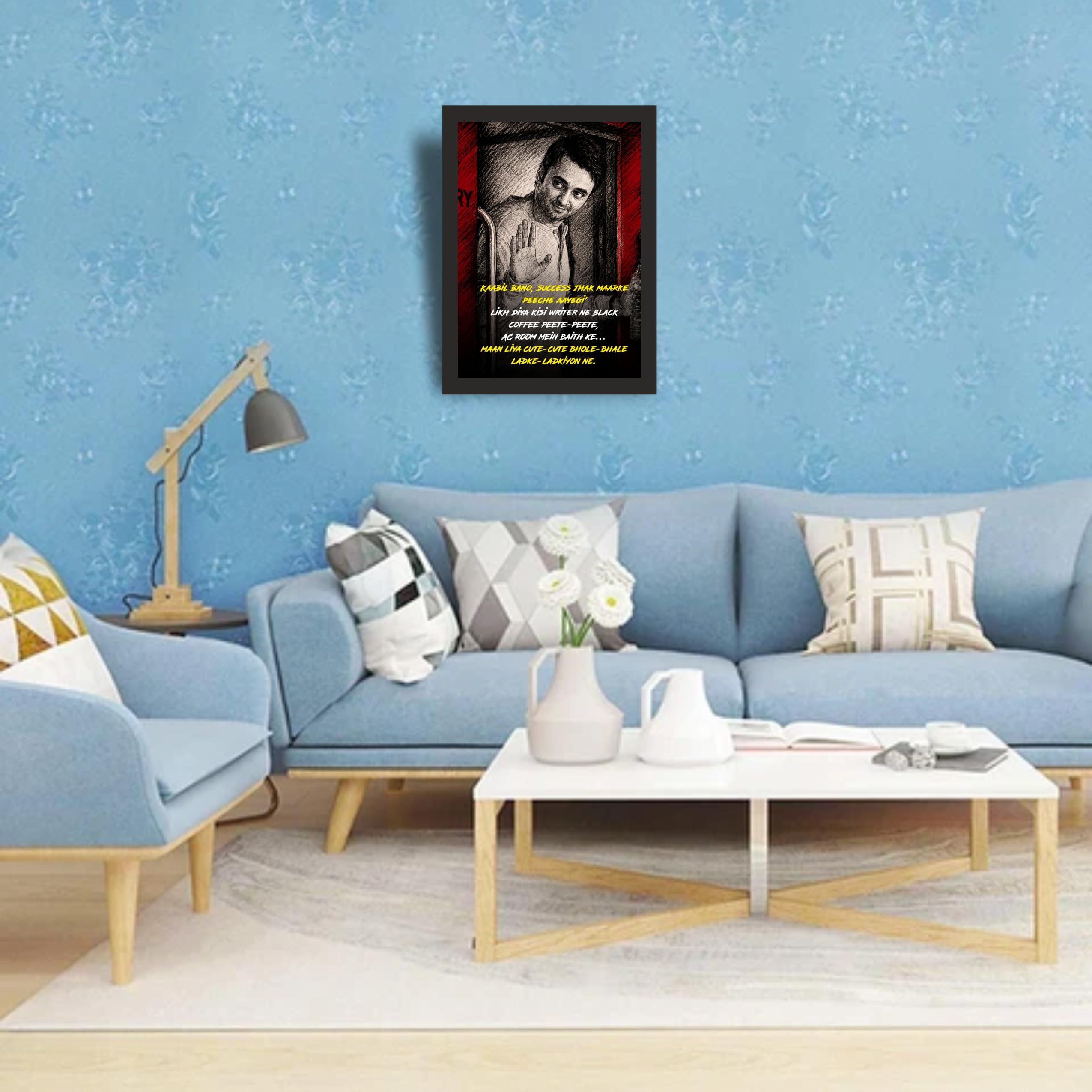
Talent Is Currency and Kaabil Bano themes draw attention to competence and the work required to build it. Talent may open a door, but practice, access, mentorship and opportunity influence whether it becomes sustainable. Capability is developed rather than declared by a slogan.
For students and early-career professionals, this idea can encourage attention to craft instead of appearance. For experienced workers, it can raise questions about how skill is recognised and rewarded. The artwork is most useful when it supports a person's chosen goal rather than being imposed as pressure.
The companion Sapne vs Everyone poster guide groups the verified collection by dreams, work, money and business themes.
Privilege and middle-class pressure complicate merit
Privilege Satire and middle-class commentary prevent the collection from becoming a simple merit story. People do not begin with equal security, networks, education or freedom to fail. Advice that sounds empowering to one person may ignore another person's risk.
Middle-class pressure can combine aspiration with caution: succeed, but do not endanger stability; dream, but remain practical; stand out, but preserve family approval. These competing instructions create emotional strain that a purely positive quote cannot capture.
Discussing privilege does not erase effort. It places effort within conditions. That more complete perspective is why satire and social observation belong beside the collection's direct motivational designs.
Six artworks as thematic prompts
The six selected products represent society versus dreams, fear and pain, fear of failure, talent, capability satire and privilege. They are not presented as a definitive interpretation or popularity ranking. Their short catalogue titles identify actual products; the analysis avoids copying extended dialogue.



Using motivational wall art thoughtfully
Choose artwork whose idea the viewer has selected for themselves. In a study or studio, place one readable frame where it can be seen without dominating the task area. In an office, avoid language that could shame, threaten or oversimplify employees' circumstances.
Consider visual treatment as well as meaning. Red-and-black portraits create intensity, while typography makes the statement direct. A strong design needs blank wall around it and should not be combined with several competing slogans.
The theme-analysis approach used in the Game of Thrones quote-frame guide offers a useful parallel: discuss identity, courage or power as ideas instead of reproducing dialogue. Character-led selection in the Friends wall art guide similarly begins with the viewer rather than a forced recommendation.
Frequently asked questions
Is Sapne vs Everyone simply motivational?
No. The catalogue themes include satire, privilege, money, family pressure, sales, business and social criticism as well as ambition.
Can a frame improve motivation?
It may serve as a personal reminder or prompt, but it cannot guarantee action, success or changed circumstances. Systems, support and practical planning still matter.
Why avoid a best-quotes article?
A quote compilation risks copying dialogue and offers less original value. Theme analysis better answers why the ideas resonate and how they relate to actual product designs.
A closer editorial lens
Family expectation deserves particular care. Concern about stability may come from experience rather than hostility to dreams, while a young person's ambition may be serious even when the route is uncertain. Useful analysis can hold both realities at once. It should not caricature every cautious parent or romanticise every risk as proof of courage.
Work is equally complicated. Long hours can reflect commitment, necessity, poor systems or exploitation. Art about effort should not be used to celebrate exhaustion or dismiss rest. A healthier reading connects skill-building with boundaries, feedback and sustainable practice, leaving room to change goals when new information appears.
Motivation is strongest when it keeps the tension
Dreams, fear, work and privilege do not resolve into one universal lesson. Their value lies in making readers consider what they want, what stands in the way and which part of that situation they can realistically influence.
That complexity should remain visible in both editorial writing and product recommendations. The frame can hold an idea; the person's decisions and circumstances give it meaning.